

How To Create an SEO Content Strategy That Converts
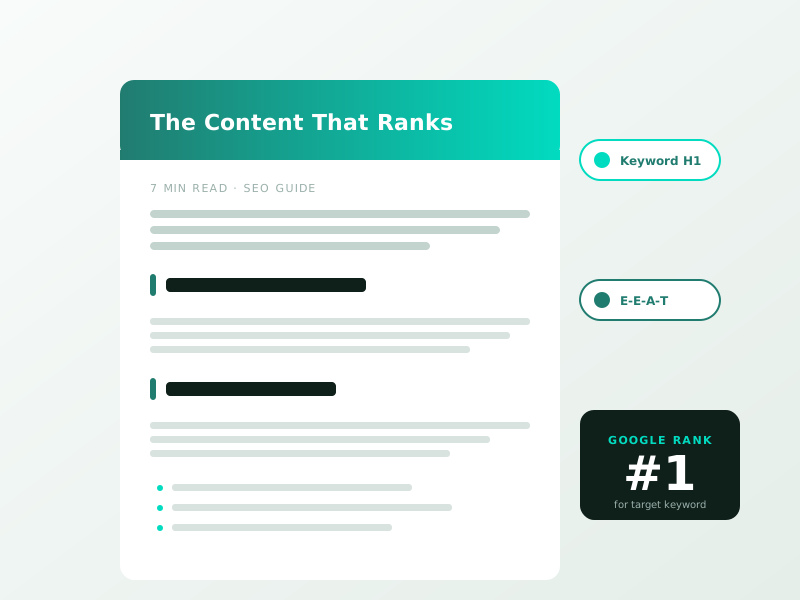
Learn how to create an SEO content strategy that drives traffic, engages your audience, and boosts conversions with actionable tips and proven techniques. Read now!
Table of Contents
In today’s digital world, content is more than just words on a page—it’s a powerful tool that can drive traffic, generate leads, and increase conversions. But without a solid SEO content strategy, even the most beautifully written content can go unnoticed. A well-executed SEO content strategy not only helps your website rank higher in search engines but also ensures that your audience finds content that meets their needs and drives them to act.
In this blog, we’ll walk you through the step-by-step process of creating an SEO content strategy that actually converts visitors into customers.
Successful SEO Content Marketing in 9 Steps
1. Understand Your Audience
Before creating any content, you need to know who you’re writing for. Without a clear understanding of your target audience, your content may miss the mark.
How to do it:
- Create buyer personas: These are detailed profiles that represent your ideal customers. Include information such as demographics, interests, pain points, goals, and buying behavior.
- Analyze website analytics: Use tools like Google Analytics to learn more about your audience’s behavior—where they come from, what pages they visit, and how long they stay.
- Monitor competitors: See who your competitors are targeting and what kind of content resonates with their audience.
Knowing your audience helps you create content that’s relevant, valuable, and likely to convert.
2. Set Clear Goals
Your SEO content strategy should align with your overall business objectives. Are you trying to build brand awareness, generate leads, boost sales, or improve customer retention?
Key goals might include:
- Increasing organic traffic
- Improving keyword rankings
- Growing your email list
- Increasing product demo requests
- Boosting online sales
Setting clear, measurable goals gives your strategy purpose and helps you track your success.
3. Conduct Keyword Research
Keyword research is the backbone of any successful SEO content strategy. You need to know what your audience is searching for and how you can provide the best answers.
Tools to use:
- Google Keyword Planner
- Ahrefs
- SEMrush
- Ubersuggest
- Answer the Public
Look for keywords with:
- High search volume: Indicates demand
- Low to medium competition: Easier to rank for
- Commercial intent: Keywords like “buy,” “best,” “top-rated,” or “near me” often signal high conversion intent
Don’t just chase keywords—make sure they align with your audience’s intent and your business goals.
4. Plan Your Content Topics Strategically
Once you have your keyword list, group them into themes or topic clusters. This approach helps search engines understand the relationship between your content pieces and strengthens your authority on specific subjects.
Structure your strategy using:
- Pillar pages: In-depth content that covers a broad topic (e.g., “The Ultimate Guide to SEO”)
- Cluster content: Related blog posts or pages that explore subtopics (e.g., “How to Do Keyword Research,” “On-Page SEO Tips”)
Use a content calendar to schedule and manage your publishing cadence. Consistency is key to building trust and ranking well.
5. Write with SEO and Conversions in Mind
While SEO gets people to your content, conversion-optimized writing turns those visitors into leads or customers.
SEO writing tips:
- Include your target keywords in the title, URL, meta description, and headers
- Use short paragraphs, bullet points, and subheadings for readability
- Add internal links to related content and external links to authoritative sources
- Optimize images with descriptive alt text
Conversion writing tips:
- Start with a compelling hook
- Highlight benefits, not just features
- Use calls to action (CTAs) like “Download now,” “Get started,” or “Book a demo”
- Incorporate social proof (testimonials, case studies, user reviews)
Remember: Your content should inform, engage, and persuade.
6. Optimize for User Experience (UX)
Search engines prioritize content that offers a great user experience. UX isn’t just about design—it’s about how easily users can access, read, and interact with your content.
UX best practices:
- Ensure fast page load times
- Use mobile-responsive design
- Improve navigation and structure
- Add interactive elements like videos, infographics, and quizzes
- Minimize popups and distractions
Good UX keeps users on your site longer, increasing the chances of conversion.
7. Promote Your Content
Great content won’t perform well if no one sees it. You need a promotion strategy to amplify its reach.
Promotion channels:
- Email marketing: Share new content with your subscribers
- Social media: Promote across platforms like LinkedIn, Twitter, and Instagram
- Paid ads: Boost posts or run Google Ads for high-performing content
- Outreach: Connect with influencers or bloggers in your niche for backlinks and mentions
The more visibility your content has, the higher its chances of ranking and converting.
8. Monitor Performance and Refine
An SEO content strategy is not a set-it-and-forget-it process. Continuous monitoring helps you identify what’s working—and what’s not.
Key metrics to track:
- Organic traffic
- Bounce rate
- Time on page
- Conversion rate
- Keyword rankings
- Backlinks
Use tools like Google Analytics, Search Console, and Ahrefs to analyze data. Update underperforming content, improve CTAs, and tweak keywords to boost results.
9. Repurpose High-Performing Content
Don’t let good content go to waste. Repurpose it into different formats to reach new audiences and extend its lifespan.
Repurposing ideas:
- Turn blog posts into videos or webinars
- Convert guides into infographics or slideshows
- Break long-form content into a series of social media posts
- Compile related posts into an eBook or email course
Repurposing also gives you more content to share and strengthens your SEO by targeting different search queries.
Final Thoughts
Creating an SEO content strategy that converts is a balance between science and storytelling. You need the technical foundation—keyword research, on-page SEO, and performance tracking—but also the creativity to craft compelling, value-driven content that speaks directly to your audience.
Remember, SEO isn’t just about driving traffic—it’s about attracting the right traffic and guiding them toward meaningful actions. When your content is optimized for both search engines and human behavior, you’ll build trust, establish authority, and grow your business organically.
Ready to get started? Audit your existing content, define your goals, and begin building a strategic content calendar that blends SEO and conversion-focused writing. Over time, you’ll not only climb the ranks in search engines—you’ll turn readers into loyal customers. You can also get the SEO services from reputed agency to scale your business.
Ready to turn this into real bookings?
Free 30-min audit. We review your current setup and give you 3 specific wins — whether we work together or not. Starts at 0/month. No contract. One medspa per market.
Book My Free Audit →No credit card. No pitch. No 12-month lock-in.
⚡ 2-minute scorecard · instant result
How healthy is your SEO right now?
Answer 5 quick questions. Get your score + the top fixes — free.
1. Are most of your key pages actually indexed in Google?
2. Do you rank on page 1 for at least a few buyer keywords?
3. Is your technical SEO (speed, errors, mobile) clean?
4. Have you updated your top pages in the last 90 days?
5. Are you earning new backlinks/mentions over time?



