
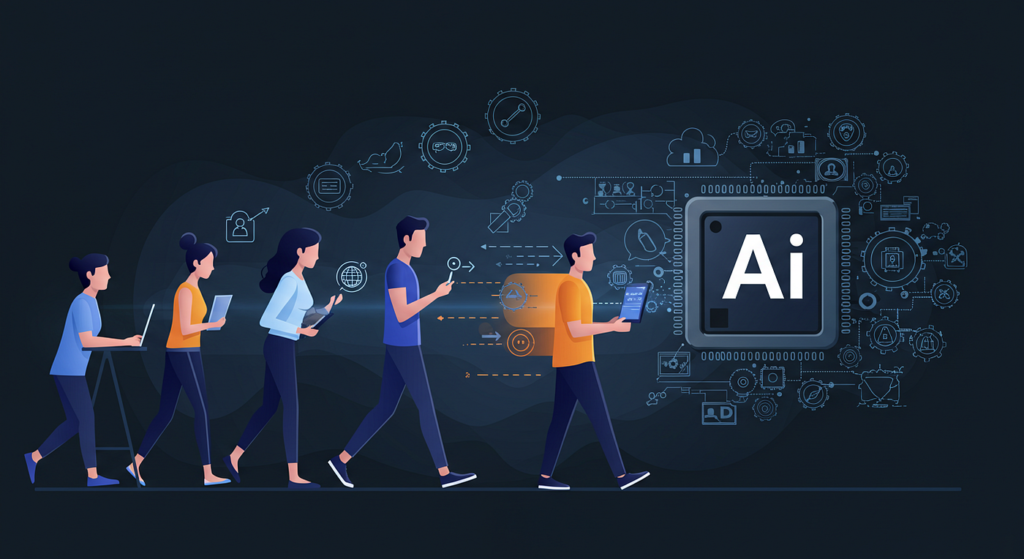
How AI is Revolutionising the Graphic Design Industry
Discover how AI is transforming the graphic design industry with faster workflows, automated creativity, personalised visuals, and smarter design decisions.
Table of Contents
The world of graphic design is undergoing a profound transformation, driven by the rapid advancement of artificial intelligence (AI). Once reliant solely on human creativity, graphic design is now evolving into a dynamic blend of artistry and intelligent automation. AI is revolutionising how designers conceptualise, create, and deliver visual content, making the process faster, more personalised, and more accessible than ever before.
In this blog, we explore how AI is reshaping the graphic design industry, the key benefits and challenges it presents, and what it means for designers and businesses in the digital age.
The Rise of AI in Graphic Design
AI is no longer just a futuristic concept, it’s actively embedded in the design tools we use today. From Adobe’s Sensei to Canva’s Magic Design, AI-powered platforms are helping designers automate repetitive tasks, generate layout ideas, optimise images, and even create original artwork. These innovations are not just conveniences; they are redefining the entire creative process.
At its core, AI in graphic design leverages machine learning algorithms and neural networks to analyse data, recognise patterns, and generate visual content that aligns with user preferences and objectives. This means that tasks which once took hours can now be completed in minutes, with impressive results.
Key Ways AI is Transforming Graphic Design
1. Automated Design Creation
AI-powered tools like Canva, Adobe Firefly, and Looka can now generate full design templates based on minimal input. Users simply describe their needs (e.g., “a modern logo for a tech company”) and the tool delivers customised design options within seconds.
This automation benefits not only non-designers but also professionals who need quick prototypes or mockups to kickstart creative direction.
2. AI-Generated Art and Illustration
Generative AI models such as DALL·E, Midjourney, and DeepArt can create highly detailed, original artwork based on text prompts. Designers can use these tools to generate backgrounds, characters, and visual elements that would otherwise require hours of manual effort.
This opens new creative possibilities, enabling designers to explore a vast range of styles and visual aesthetics without starting from scratch.
3. Enhanced Image Editing and Enhancement
AI has significantly improved image editing tools. Features like background removal, object detection, and facial recognition have become faster and more accurate. Adobe’s Content-Aware Fill and Luminar’s AI Sky Replacement are great examples of AI-driven enhancements that simplify complex editing tasks.
These tools free up designers’ time, allowing them to focus more on creativity and storytelling.
4. Real-Time Feedback and Suggestions
AI can now provide real-time design feedback, such as suggesting better font pairings, optimising colour schemes for accessibility, or recommending layout improvements. This assists designers in making more informed decisions, especially when working under tight deadlines.
It’s like having a virtual design assistant that never sleeps.
5. Personalisation at Scale
AI excels at analysing user data and behaviours, making it a powerful tool for personalised graphic content. Whether it’s dynamic social media ads, custom email banners, or website visuals tailored to user segments, AI enables brands to create more relevant and engaging designs for their audiences.
This personalisation improves conversion rates and user experience significantly.
6. Data-Driven Design Decisions
AI tools can analyse user interaction data, such as heatmaps or engagement metrics, and offer insights into which design elements are performing well. This data-driven approach helps designers make more strategic decisions, blending creativity with functionality.
Benefits of AI in Graphic Design
⚡ 2-minute scorecard · instant result
Is your website quietly costing you leads?
Answer 5 quick questions. Get your score + the top fixes, free.
1. Does your site load in under 3 seconds on mobile?
2. Is there one clear call-to-action above the fold?
3. Is your main lead form 5 fields or fewer?
4. Is the whole site genuinely mobile-friendly?
5. Are trust signals (proof, reviews) near your CTA?
Speed and Efficiency
AI drastically reduces the time required to complete design tasks. Whether it’s resizing graphics for multiple platforms or generating content ideas, AI tools streamline workflows, improving productivity.
Cost Reduction
For startups and small businesses, hiring full-time designers may not be financially feasible. AI tools provide affordable design solutions that offer professional results, making high-quality visuals accessible to all.
Creative Exploration
AI offers new avenues for creative experimentation. Designers can generate countless variations of a design, explore different aesthetics, or merge styles with minimal effort. It becomes a sandbox for innovation.
Consistency and Accuracy
AI ensures consistent branding by adhering to pre-set guidelines for colours, fonts, and layouts. This is particularly useful for large organisations that require visual coherence across departments and platforms.
Accessibility
With user-friendly AI platforms, individuals with little to no design experience can now create compelling graphics. This democratises design, empowering more people to express their ideas visually.
Challenges and Concerns
Creative Authenticity
One of the biggest debates around AI in design is whether AI-generated art lacks the “soul” of human creativity. While AI can replicate styles and generate content, it cannot (yet) understand emotion or context at the level a human can. For projects that require deep emotional storytelling, human intuition remains irreplaceable.
Job Displacement Fears
As AI handles more tasks, some fear it could replace graphic designers. However, most industry experts believe AI is a tool, not a replacement. Designers who embrace AI stand to enhance their roles, focusing more on strategy, concept development, and emotional storytelling.
Ethical and Copyright Issues
With AI generating content based on existing artworks or training data, concerns arise over originality and copyright infringement. Clear guidelines and legal frameworks are still evolving, and designers must be cautious about how they use AI-generated visuals.
Lack of Emotional Intelligence
AI cannot yet fully grasp nuanced emotional cues or cultural sensitivities. While it excels at producing content based on patterns, it struggles with context-heavy projects that require human empathy and depth.
The Future of AI in Graphic Design
The future of graphic design will likely see an even deeper integration of AI, with tools becoming more intuitive, conversational, and immersive. Some anticipated developments include:
- Voice-command design: Tools that respond to spoken instructions to create or edit visuals.
- Augmented reality (AR) design tools: AI-assisted design within immersive environments.
- AI-human collaboration platforms: Where AI generates options and designers refine them with more emotional and cultural nuance.
Rather than replacing designers, AI will become a creative partner, handling the repetitive tasks while allowing human designers to focus on higher-level conceptual work and innovation.
Final Thoughts
AI is undeniably transforming the graphic design industry, bringing about a new era of efficiency, accessibility, and creative potential. While challenges exist, the overall impact of AI is overwhelmingly positive, empowering designers, streamlining workflows, and pushing the boundaries of what’s possible in visual communication.
The key for designers and businesses alike is to embrace AI not as a threat but as a tool. Those who adapt and learn to integrate AI into their creative processes will find themselves at the forefront of a smarter, more innovative design future.
Whether you’re a solo designer, a creative agency, or a business in need of visual storytelling, now is the time to explore how AI can elevate your graphic design strategy. Because the future of design isn’t just human, it’s human + AI.
Ready to turn this into real bookings?
Free 30-min audit. We review your current setup and give you 3 specific wins — whether we work together or not. Starts at 0/month. No contract. One medspa per market.
Book My Free Audit →No credit card. No pitch. No 12-month lock-in.



