
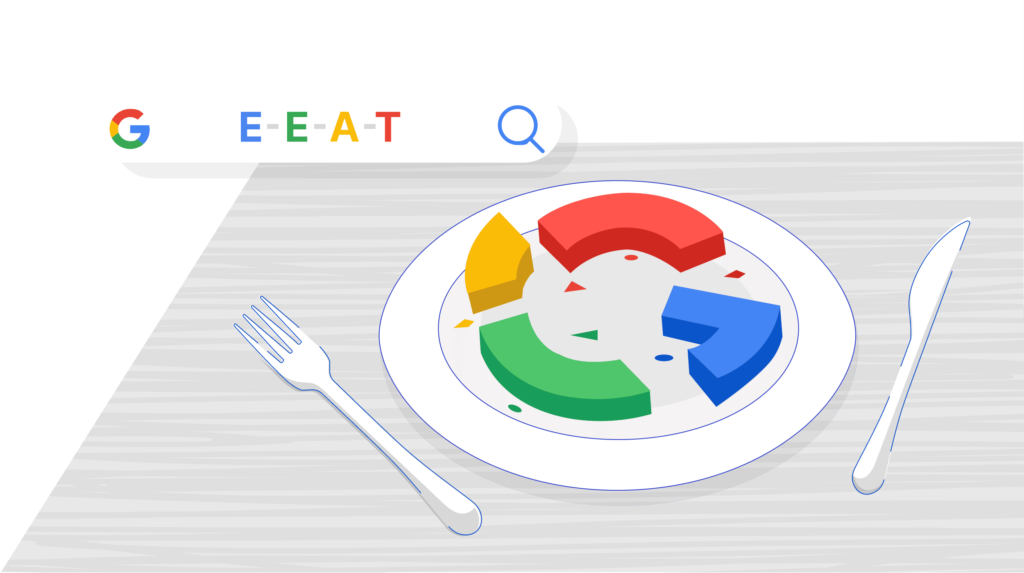
Google E-E-A-T: Meaning and Optimisation Tips for Better Rankings
Learn what Google E-E-A-T means and how to optimise for it to boost your rankings. Improve trust, authority, and content quality with these expert SEO tips.
Table of Contents
In the ever-evolving landscape of search engine optimisation, staying ahead means understanding what Google values most. One such concept that plays a crucial role in how Google evaluates content quality is E-E-A-T. Originally introduced as E-A-T in Google’s Search Quality Rater Guidelines, it has since evolved into E-E-A-T, adding an extra “E” for Experience. For businesses and digital marketers aiming to improve rankings and establish authority, understanding and optimising for E-E-A-T is non-negotiable.
In this blog, we’ll break down what E-E-A-T means, why it matters for SEO, and how you can optimise your content and brand presence to meet Google’s expectations, especially if you’re leveraging SEO services to grow online visibility.
What Is Google E-E-A-T?
E-E-A-T stands for:
- Experience
- Expertise
- Authoritativeness
- Trustworthiness
It is not a direct ranking factor (like page speed or mobile-friendliness), but it is a significant part of Google’s algorithmic and manual review processes that determine the quality of a page, particularly in YMYL (Your Money or Your Life) niches such as health, finance, and legal.
Let’s explore what each element means:
1. Experience
The newest addition to the acronym, Experience refers to the first-hand or life experience of the content creator. For example, a review written by someone who has actually used a product or a travel blog by someone who visited the destination demonstrates real-world experience that adds depth and authenticity.
2. Expertise
Expertise refers to the depth of knowledge or skill shown in the content. Google looks for content written by people who are genuinely knowledgeable in the subject matter, especially in sensitive topics like medical advice or financial planning.
3. Authoritativeness
This relates to how credible and well-regarded the website and its authors are in their industry. Authority is often signaled through mentions, backlinks from reputable sources, and recognition within a specific field.
4. Trustworthiness
Trust is the cornerstone of E-E-A-T. It measures how reliable and accurate the content and website are. Trust indicators include clear contact information, secure website protocols (HTTPS), transparent editorial policies, and factual accuracy.
Why E-E-A-T Matters in SEO
While E-E-A-T itself isn’t a single ranking factor, it significantly influences how Google evaluates your content’s quality and relevance, particularly for high-stakes topics.
Here’s why E-E-A-T is critical for your SEO strategy:
- Improves content quality signals that align with Google’s Quality Rater Guidelines.
- Increases user trust, leading to lower bounce rates and higher engagement.
- Helps combat misinformation by promoting accurate, reliable content.
- Supports long-term SEO success by aligning with Google’s goal of delivering value-driven content.
If you’re using professional SEO services, optimising for E-E-A-T should be part of your comprehensive content strategy.
How to Optimise for E-E-A-T: Practical Tips
⚡ 2-minute scorecard · instant result
How healthy is your SEO right now?
Answer 5 quick questions. Get your score + the top fixes, free.
1. Are most of your key pages actually indexed in Google?
2. Do you rank on page 1 for at least a few buyer keywords?
3. Is your technical SEO (speed, errors, mobile) clean?
4. Have you updated your top pages in the last 90 days?
5. Are you earning new backlinks/mentions over time?
1. Showcase Real Experience
- Include personal insights, original images, or case studies to demonstrate firsthand knowledge.
- Add testimonials, client feedback, and product reviews that reflect real-world use.
- Use authors who have actual experience with the subject matter to improve content authenticity.
Example: If you’re writing a blog on skincare routines, highlight that the author is a certified dermatologist or has tested the products personally.
2. Demonstrate Expertise
- Include author bios that highlight relevant credentials, education, or professional experience.
- Use industry-specific terminology appropriately to show deep understanding.
- Create content that educates, solves problems, and adds genuine value.
Tip: For topics in health, finance, or law, expert-written or expert-reviewed content is critical.
3. Build Authoritativeness
- Earn high-quality backlinks from reputable sources in your industry.
- Be active in your niche community through guest blogging, webinars, or social media discussions.
- Get mentioned or cited by trusted publications or influencers.
Authoritativeness builds over time. Consistently publishing valuable content and gaining recognition is key.
4. Boost Trustworthiness
- Use HTTPS and make sure your website is secure.
- Display contact information, physical address, and customer support details clearly.
- Implement clean, user-friendly design and transparent policies (privacy, return, editorial).
- Check content for accuracy and regularly update it to reflect the latest information.
Trust is not only about content but also the overall user experience of your website.
5. Leverage Author Pages and Structured Data
- Use author pages with detailed bios and links to social profiles or credentials.
- Implement schema markup (like Article, Person, or Review schema) to help search engines understand your content better.
Structured data adds context and can lead to enhanced visibility through rich results.
6. Get Published and Cited
- Aim to have your content or brand featured on trustworthy sites, blogs, or directories.
- Use HARO (Help a Reporter Out) or similar services to become a quoted expert.
- Encourage user reviews on platforms like Google, Yelp, or industry-specific sites.
These external signals support your authoritativeness and trustworthiness.
7. Maintain Consistency Across Channels
- Ensure your branding, messaging, and claims are consistent on your website, social media, and third-party platforms.
- Discrepancies can hurt credibility and trust.
8. Focus on Content Depth and Quality
- Avoid thin or duplicate content. Go in-depth and address related subtopics.
- Use credible sources and cite them properly.
- Include visual aids like infographics, charts, or videos to support complex information.
High-quality content that answers users’ questions thoroughly will always perform better in terms of SEO and engagement.
How SEO Services Help You Achieve E-E-A-T
Professional SEO services can play a significant role in improving your E-E-A-T signals by:
- Performing content audits to identify gaps in experience, expertise, and trust.
- Creating or refining author bios and structured data.
- Securing authoritative backlinks through strategic outreach.
- Helping publish expert-driven content that aligns with Google’s guidelines.
- Enhancing your website’s usability, speed, and security.
By aligning your SEO efforts with E-E-A-T principles, you not only improve your chances of higher rankings but also provide a better, more credible experience for your users.
Final Thoughts
Google’s E-E-A-T is more than just a checklist, it’s a framework for building content and digital presence that truly serves users. As search engines become more sophisticated, the bar for content quality and website credibility continues to rise.
By optimising for Experience, Expertise, Authoritativeness, and Trustworthiness, you create a stronger brand, attract more engaged users, and ultimately improve your search engine rankings. Whether you’re doing it in-house or through professional SEO services, focusing on E-E-A-T is an investment in long-term online success.
Remember: It’s not just about ranking higher, it’s about being the most reliable, relevant, and reputable source in your niche. And that’s what Google, and your audience, truly values.
Ready to turn this into real bookings?
Free 30-min audit. We review your current setup and give you 3 specific wins — whether we work together or not. Starts at 0/month. No contract. One medspa per market.
Book My Free Audit →No credit card. No pitch. No 12-month lock-in.



